

When it comes to vape products, the abbreviation “POD” is often at the center of attention. But what exactly does “POD” mean? This term symbolizes a perfect balance of flavor, performance, and durability. Whether in music, like the band P.O.D. (Payable on Death), or in technology – the term “POD” is versatile and fascinating.
Especially in the field of vape products, “POD” has established itself as a synonym for innovative technology and user-friendliness. Many well-known brands offer “POD” systems that impress with their efficiency and longevity. But why are these systems so attractive to vape enthusiasts?
The answer lies in the combination of cutting-edge technology and user-friendly design. “POD” systems offer simple handling while also providing impressive performance. Whether for beginners or advanced users – these systems meet all needs.
-
 Vaporesso XROS Pro Pod Kit Vape Buy 1200mAh€15,89
 -
 Geekvape Wenax M Starter Kit 2500mAh Buy€19,87
 -
 Vaporesso XROS 4 Mini Pod Kit 1000 mAh€9,87
 -
 OXVA Xlim V2 Pod Kit 900mAh€10,78
 -
 OXVA XLIM C Pod Kit 900mAh€9,87
 -
 OXVA Origin SE Pod Kit 1400 mAh€7,98
 -
 OXVA ARTIO Pod System Kit 550mAh€7,98
 -
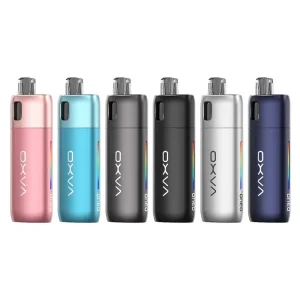 OXVA ONEO Pod Kit 1600mAh€7,98
 -
 OXVA Xlim Go Pod System Kit 2ml€7,98
Introduction to POD
The abbreviation “POD” refers to a variety of meanings that have developed over time.
Definition and Origin
The term "POD" originally comes from English and stands for "Payable on Death."
Originally, it served as a financial term to refer to assets that were to be transferred only after a person's death.
In the 1990s, the abbreviation "POD" gained additional recognition through the band of the same name "P.O.D.," which was founded in 1992 in San Diego.
Meaning in Different Contexts
Today, "POD" is used in various fields:
- In the music scene: The band P.O.D. is known for their unique blend of rock and hip-hop.
- In IT: "Plain Old Data" refers to simple, unstructured data formats.
- In biochemistry: "Plain Old Data" is used to describe basic chemical structures.
The range of applications shows how the term "POD" has evolved over time and in which fields it is relevant today.
POD in the Music Scene
The band P.O.D. (Payable on Death) has significantly contributed to the popularity of the abbreviation "POD." Founded in 1992 in San Diego, California, the band shaped the music scene with their unique blend of rock and hip-hop.
History and Development of the Band P.O.D.
The founding members – singer Sonny Sandoval, guitarist Marcos Curiel, bassist Traa Daniels, and drummer Wuv Bernardo – quickly found their distinctive sound. Their music combines profound lyrics with energetic rhythms, earning them a loyal fan base.
Success Models and Awards
A milestone in their career was the album "The Fundamental Elements of Southtown," released in 1998. The breakthrough came with the album "Satellite" in 2001, which achieved platinum status with hits like "Alive" and "Youth of the Nation."
Her music has been nominated for multiple Grammy Awards, highlighting her musical excellence. The band has sold millions of albums worldwide and remains a significant influence in the music industry.
POD as a Technological Term
In the field of information technology, the abbreviation "POD" has a special meaning. It stands for "Plain Old Data" and refers to unstructured or simply structured data formats. This type of data is fundamental for software development and is often used in systems that require high flexibility and adaptability.
Plain Old Data and IT Applications
Plain Old Data (POD) are data that are not organized in complex structures. They are often stored in the form of text files, CSV files, or simple database tables. The special feature of POD lies in its simplicity, which facilitates integration and further processing in various systems.
An example of this are log files that store important system information in plain text format. This data can be easily analyzed and visualized, making it an essential part of modern IT systems.
Plain Old Documentation in Software Development
In software development, "POD" also refers to "Plain Old Documentation." This method aims to make documentation simple and understandable. Instead of using complex markup languages, developers rely on clear text formats that are easy to read and edit.
A good example is the use of Markdown, which is employed as a simplified markup language in many development environments. This approach not only promotes collaboration within the team but also reduces the time required for creating and maintaining documentation.
The combination of Plain Old Data and Plain Old Documentation allows developers to work more efficiently. By using simple structures and clear documentation, complex IT projects can be better designed and implemented. These approaches have proven effective over time and are now an integral part of modern software development.
Other Meanings of POD
The abbreviation POD has different meanings in various scientific disciplines. In addition to the musical and technical meanings already discussed, POD also plays an important role in biochemistry.
Enzymatic Functions and Biochemical Aspects
In biochemistry, POD stands for peroxidases, a group of enzymes that play an important role in biological processes. Peroxidases are responsible for breaking down hydrogen peroxide (H2O2), a strong oxidizing agent that is produced in cells and can potentially be harmful.
These enzymes catalyze the reaction in which H2O2 is converted into water and oxygen. This process is crucial for protecting cells from oxidative stress. Peroxidases are found in many organisms, from bacteria to higher eukaryotes.
A well-known group of peroxidases is that of catalases, which occur in almost all aerobic organisms. They are localized in specialized cell structures such as peroxisomes and protect cells from damage caused by free radicals.
However, the significance of peroxidases goes beyond basic research. In industrial biotechnology, they are used, for example, for wastewater treatment or the production of cosmetics.
POD in Transportation and Logistics
In the transportation and logistics industry, the abbreviation POD has a special significance. It stands for two central concepts: Proof of Delivery and Port of Discharge. Both play a crucial role in the security and efficiency of delivery processes.
Proof of Delivery: The Delivery Confirmation
Proof of Delivery (POD) serves as proof that a delivery has successfully arrived at the recipient. This proof is especially important to secure the delivery process and avoid potential disputes. In practice, the POD is often recorded digitally, for example, through the recipient's signature on a tablet or via specialized software.
An example of this is the delivery of packages by logistics companies. Once the courier has handed over the shipment, the recipient confirms receipt digitally. This confirmation not only serves as proof but also enables transparent tracking of the delivery.
Port of Discharge: The Unloading Port
The Port of Discharge (POD) refers to the port where cargo is unloaded from a ship. This step is critical in international trade, as it marks the transfer point between the parties involved. Choosing the right unloading port can influence the entire supply chain.
A good example is the Port of Hamburg, one of the largest unloading ports in Europe. When an Asian container ship arrives in Hamburg, the cargo is unloaded here and transported further toward European destinations. This process ensures efficient distribution of goods.
- Proof of Delivery secures the delivery process and serves as a legal proof.
- Port of Discharge is a central point in international logistics.
- Both concepts contribute to a transparent and efficient supply chain.
- Digital recording of POD enables easy tracking.
- Choosing the right unloading port can optimize the supply chain.
By combining Proof of Delivery and Port of Discharge, the entire logistics industry becomes more efficient and transparent. These concepts are indispensable for meeting the high demands of modern supply chains.
POD in Culture and Media Landscape
The abbreviation POD has not only become established in technical or scientific fields but also shapes culture and the media landscape. From music to film to pop culture – POD is creatively used to shape content and tell stories.
Films, Music, and Pop Culture References
A prominent example is the music project 'Pick of Destiny' by the band Tenacious D. Here, POD serves as a metaphorical term symbolizing the search for the ultimate creative expression. POD is also often used as a title or central theme in films to represent innovation and vision.
- The band P.O.D. has influenced the music scene with hits like 'Alive' and has bridged the gap between rock and hip-hop.
- In advertising, POD systems are often portrayed as synonyms for modernity and efficiency, influencing perceptions in pop culture.
- Contemporary media products use POD to establish a connection between technology and entertainment.
This creative adaptation of POD across various media demonstrates how versatile the term is and the central role it plays in today's culture.
The abbreviation POD is a fascinating example of how a term can take on multiple meanings. Whether in music, technology, biochemistry, or logistics – POD has found its own significance in numerous fields.
A particular aspect is the band P.O.D., which popularized the term in the music scene. At the same time, POD in IT stands for 'Plain Old Data,' and in biochemistry, it refers to peroxidases, which perform vital functions in cells. In logistics, POD serves as proof of successful deliveries or refers to the unloading port.
Personally, I am fascinated by the versatility of POD. It shows how a simple term can carry deep technical, cultural, and scientific meanings. This flexibility makes POD not only a practical tool but also a symbol of innovation and clarity in various disciplines.