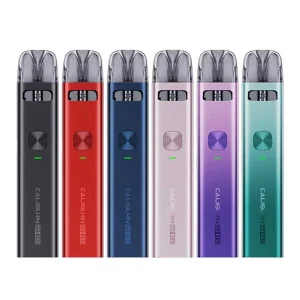

What is really in your e-cigarette? Ingredients and health risks in the fact check
The popularity of e-cigarettes has exploded worldwide. Often promoted as a “clean” alternative, many users wonder: Is vaping really harmless? The answer is complex.
This article scientifically analyzes the ingredients of e-cigarettes – from nicotine to flavorings – and examines the potential risks to the heart and lungs. Our goal is education rather than panic.
1. The anatomy of vapor: What are you inhaling?
Unlike cigarette smoke, which is produced by combustion, e-cigarettes generate an aerosol. The base liquid consists of a few main components:
- Propylene glycol (PG) & Vegetable Glycerin (VG): The carrier substances for the vapor.
- Nicotine: The active ingredient (optional).
- Flavors: For flavor.
But what do these substances do in the body?
2. Nicotine: Effects on the brain and heart
Nicotine is the main reason people smoke or vape. It is not carcinogenic, but also not risk-free.
Addiction potential
Nicotine is a psychoactive substance. It binds to acetylcholine receptors in the brain and releases happiness hormones like dopamine.
- The risk: This reward loop leads to physical and psychological dependence. Especially teenagers are susceptible because their brains are still developing.
Cardiovascular system
Nicotine stimulates the sympathetic nervous system (fight-or-flight mode).
- Blood pressure & pulse: It temporarily constricts blood vessels and raises blood pressure.
- Long-term effects: For people with pre-existing conditions, this can increase the risk of cardiovascular events.
- Classification: Compared to the tobacco cigarette, however, it lacks carbon monoxide, which blocks oxygen transport in the blood. The cardiac load from vaping is therefore considered lower, but still relevant for heart patients.
3. Propylene glycol (PG) and Vegetable Glycerin (VG)
These substances are approved as food additives, but inhalation is a different matter.
- Respiratory irritation: PG is hygroscopic (water-absorbing). This can lead to a dry throat and cough reflex.
- Allergies: A small group of people reacts allergically to PG. Symptoms can include skin rashes or shortness of breath. In this case, switching to 100% VG liquids is recommended.
4. The controversy over flavors and heating
This is often where the biggest misunderstanding lies.
Chemical reactions at heat
If liquid is overheated (e.g., during a 'Dry Hit'), PG and VG can decompose and Aldehydes (such as formaldehyde) form.
- Important to know: Modern temperature-controlled e-cigarettes usually prevent this. Studies show that formaldehyde exposure during normal use is drastically lower than in cigarette smoke.
“Popcorn lung” and Diacetyl
Warnings about severe lung damage from flavorings are common. A well-known substance is diacetyl, which was used in some products in the US.
- Fact check: In the EU (and thus also in Germany/Spain), diacetyl in liquids is prohibited according to TPD guidelines . Therefore, only regulated products from legal sources should be purchased.Some studies have found traces of metals (nickel, chromium) in vapor, which can leach from the heating coil.
5. Heavy metals: A real risk?
The dose makes the poison:
- While these metals are toxic, the measured amounts are usually extremely low and well below occupational safety limits. Nevertheless, the rule is: regular replacement of coils (atomizer heads) minimizes this risk. The science is clear:
E-cigarette vs. tobacco
Electronic cigarettes are not risk-free. Those who have never smoked should not start using them. However, the principle for smokers applies:
Since there is no combustion, thousands of toxic substances and tar are removed. Health authorities such as Harm Reductionassess vaping as significantly less harmful than smoking tobacco—provided that tested products are used and complete abstinence from cigarettes is maintained. Public Health England ‘Popcorn lung’ and diacetyl
-
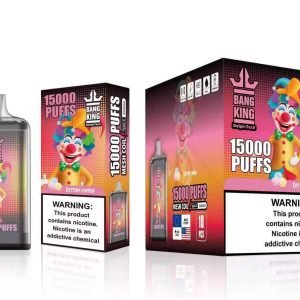 BANG KING Digital 15000 PUFFS Cotton Candy A delicious disposable e-cigarette that offers you 15,000 puffs full of sweet cotton candy.€4,78 – €6,83
 -
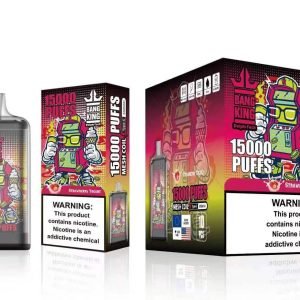 Enjoy the delicious refreshment of BANG KING Digital 15000 PUFFS Strawberry Yogurt for an unforgettable and fruity vaping experience€4,78 – €6,83
 -
 Enjoy the harmonious blend of three delicious fruits with BANG KING Digital 15000 PUFFS for intense vaping€4,78 – €6,83
 -
 Enjoy 15000 puffs full of fresh mint with BANG KING Digital 15000 PUFFS Cool Mint for unforgettable pleasure€4,78 – €6,83
 -
 BANG KING Digital 15000 PUFFS Pink Lemonade 15000 puffs full of fruity joy that delight your taste buds with every puff€4,78 – €6,83
 -
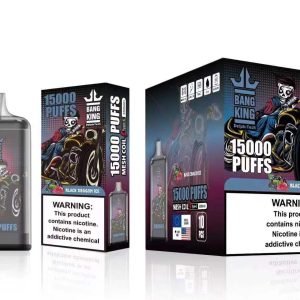 BANG KING Digital 15000 PUFFS Black Dragon Ice 15000 puffs full of icy freshness that enchant your senses with every puff€4,78 – €6,83
 -
 BANG KING Digital 15000 PUFFS Watermelon Bubblegum 15000 puffs full of fruity joy that enchant your taste buds with every puff€4,78 – €6,83
 -
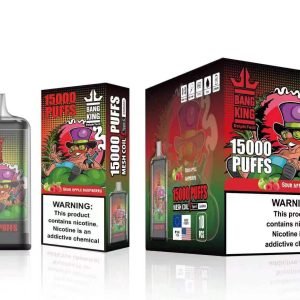 Enjoy the delicious freshness of BANG KING Digital 15000 PUFFS Sour Apple Raspberry disposable e-cigarette with 15000 puffs full of flavor€4,78 – €6,83
 -
 Experience the fruity harmony of Kiwi Passion Fruit and Guava with BANG KING Digital 15000 PUFFS for tropical vaping€4,78 – €6,83